Tuesday, September 18, 2007

The Secret Life of Lobsters: How Fishermen and Scientists Are Unraveling the Mysteries of Our Favorite Crustacean - Trevor Corson

The Basics: The Secret Life of Lobsters: How Fishermen and Scientists Are Unraveling the Mysteries of Our Favorite Crustaceans, Trevor Corson, 2004, 289 pages, hardcover

How I found it: After I read The Sushi Economy and was looking for reviews of that book, I noticed that many of the reviews mentioned another sushi book called The Zen of Fish by Trevor Corson. Since my local library doesn't have The Zen of Fish yet, and I live in the lobstering region of Canada, I decided to read Corson's other book on lobsters.

What's it about?: The book explores scientific research on lobster behaviour. Apparently, up until a few decades ago, scientists had no idea what lobsters were up to underwater, or even where they lived or why. The book also examines the contribution of lobster fishermen to this research. The book could also be called the secret lives of lobstermen since it deals with the struggles lobster fishermen have faced and how they have contributed to the conservation effort.

Did I like it?: I loved this book. I learned so much about lobsters that I didn't even know I wanted to learn. The secret life of lobsters is really an underwater soap opera, and I was fascinated by it. This book is really well written and presents the scientific information in an easy to understand and compelling manner. Like the Sushi Economy, this book also made me really hungry for lobster.

Will you like it?: If you like non-fiction at all, this is a great book to read. You'll learn so much about lobsters and even if you thought you weren't interested in lobsters, you will be by the time you finish the book. I can't recommend this book enough.

But don't take my word for it: The usual product info and reader reviews from Amazon, a review from Maine's The Working Waterfront, one from mostlyfiction.com, another from Pop Matters, one from someone at Brown University, and a selection of reviews from goodreads.com.

Friday, September 14, 2007

Catwatching - Desmond Morris

The Basics: Catwatching, Desmond Morris, 1986, 105 pages, hardcover

How I found it: After repeatedly wondering why exactly my cat was doing something, I went in search of a book on cat behaviour at my local public library. This seemed the most informative option, so I picked it up.

What's it about?: The book is written in question and answer form. Each question asks something that people typically want to know about cats, such as 'Why do cats purr?' Basic cat behaviour is covered, as is mating, fighting, kitten-rearing, and the origins of cat-related phrases, such as 'raining cats and dogs'.

Did I like it?: I had previously spent some time on the internet generally, and on wikipedia, trying to find info about cat behaviour. I hadn't found much. This book answered most of the questions I had about cats. I found it really informative. Though I read the whole book cover-to-cover, it would also be a good resource to have around if you just wanted to know a few particular things about cat behaviour.

Will you like it?: If you own a cat or spend time with cats, this is a must read. If don't care for cats, it might still explain a bit about why they act the way they do.

But don't take my word for it: The usual editorial and reader reviews from Amazon and the author's web page were really all I could find.

Tuesday, September 11, 2007

The End of East - Jen Sookfong Lee

The Basics: The End of East, Jen Sookfong Lee, 2007, 245 pages, hardcover

How I found it: I remembered reading an interview with Lee in the Tyee this summer, and then picked up her book during some random browsing at Chapters.

What's it about?: The narrator is university-aged Samantha (Sammy) Chan who flees her troubled personal life in Montreal to return home to care for her aging mother after her old sister moves out. The story isn't really that much about Sammy though - it is more about her memories of her parents and grandparents. Sammy's portions of the story are told in first person, but much of the book is focuses on Sammy's parents and grandparents and their early days in Canada after arriving from China. These portions are told in the third person. In general, the plot revolves around the struggles of three generations of Chans: the struggles to make a life in Canada, to have positive relationships with their family members, and to have positive relationships with themselves. All of the Chans say that they feel that Vancouver's Chinatown is a part of them, so much so that they could walk its streets blindfolded after not having visited in years. Similarly, Vancouver's Chinatown is a part of this book - Lee has tried to capture the essence of Chinatown in a novel.

Did I like it?: I really enjoyed this book since Lee is an amazing writer. This is her first novel, and it is a great debut. Previously, Lee was known as a celebrated poet, and it shows in her writing. Her words are carefully chosen, which makes the story flow so well, and really brings it to life for the reader. Lee gives the book an undertone of melancholy and of things left unsaid, which is both beautiful and depressing. The amount of emotion that she is able to coax out of seemingly stoic characters is fabulous. The only thing that bothered me a bit about the book is that we didn't learn enough about Sammy and her journey. Perhaps Lee will have to write several other companion books as Wayson Choy did to tell the rest of the story of this Vancouver Chinatown family.

Will you like it?: This is a great book - good story, excellent writing. It really sucks you in and I was upset when it was over. If you like quality fiction, you'll like this book. Its a great one for bookclubs as well.

But don't take my word for it: Glowing editorial and reader reviews from Amazon, a review from Vancouver alternative weekly The Georgia Straight, one from the blog Lotus Reads, another from January Magazine, and a collection of review links from Vancouver's Toddish McWong of Gung Haggis Fat Choy fame.

Friday, September 07, 2007

The Sushi Economy: Globalization and the Making of a Modern Delicacy - Sasha Isenberg

The Basics: The Sushi Economy, Sasha Issenberg, 2007, 323 pages, hardcover.

How I found it: Random browsing at Chapters.

What's it about?: This book purports to be about the economy of sushi, but really it is about the economy of sushi grade tuna. Tuna is the quintessential sushi fish, and the rise in popularity of sushi had profound effects on the global tuna fishing (and ranching) industries. Issenberg explains why and how tuna became so popular, and what the global effects of sushi have been on tuna. He uses examples of fishermen, tuna ranchers, sushi chefs, and Japanese fish wholesalers in Tokyo's famous Tsukiji fish market to elaborate various points. However, not much of the book actually talks about sushi. The title implies that you will learn about why and how sushi became popular, but the book doesn't deliver. There are a few pages about this topic, but really, the book is about tuna.

Did I like it?: I found most of this book fairly interesting. As a huge, sushi fan, it was good to learn more about the history of sushi, and how my meal gets to the table. I was disappointed in the focus on tuna. I come from the salmon dominated sushi centre of Vancouver, where tuna is popular, but certainly not the focus. Apparently this is the reverse from everywhere else in the sushi-eating world. In general, the book was largely informative, but sometimes dry.

Will you like it?: If you eat sushi, or even if you just eat fish, this is an interesting book as it explains the complicated logistics of getting fresh fish to you. It also if very telling, as it acknowledges the prof0und changes we have seen in fishing in the last few decades and the globalization of seafood production. Just don't expect this book to talk too much about sushi itself. A nice glossy cookbook with lots of pictures, or a visit to a good sushi restaurant will be far more satisfying to a sushi aficionado than reading this book (although I was constantly hungry while reading it).

But don't take my word for it: A collection of positive reviews from the book's official website, a review from the trend-spotting website martiniboys.com, one from Washington Monthly, another from Christian Science Monitor, one from the Financial Times, a New York Times review that comes it to Trevor Corson's The Zen of Fish (which is on my list of things to read), and finally, another one from a fellow book blogger.

Friday, August 31, 2007

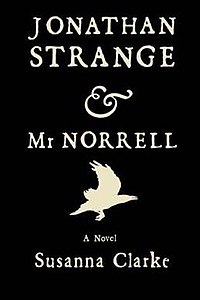
Jonathan Strange & Mr. Norrell - Susanna Clarke

The Basics: Jonathan Strange & Mr. Norrell, Susanna Clarke, 2004, 1006 pages, paperback

How I found it: Random browsing in Chapters. I believe I picked it up because it sounded interesting and it was a best seller.

What's it about?: This book is historical fiction (or fictionalized history?) and deals with the return of magic to England in the 1800s. The protagonists are Jonathan Strange and Mr. Norrell, two magicians who go from being unknown and known, to master and pupil, to sworn enemies, to... whatever it is they are the end of the book. The book is fairly long and deals with the minutia of the lives of these magicians. In addition to being about magic, this book deals with the historical events in England at the time, such as the Napoleonic wars. This novel is a bit Austen or Bronte-esque in that it is obsessed with the social engagements and standing of each of its characters.

Did I like it?: This book drove me crazy. It took me a very long time to read it - not only because the book itself is long, but because for great portions of it I was uninterested in it. The book is 1006 pages long and it is the author's first novel. She could have benefited greatly from a better editor. The book could have been perhaps a third of the length and still told the same story. Clarke seemed determined to make the reader feel as if they were reading a historical book so she added numerous and mostly irrelevant footnotes and some "ye olde english" spellings. This just drove me crazy. Large portions of the plot could have been summarized in a chapter or two, but instead they drag on for hundreds of pages. The characters of Jonathan Strange and Mr. Norrell are not particularly likable or relatable, and the author's treatment of them leaves the reader wondering who we are supposed to root for - who is the hero and who is the villian? Overall, I was disappointed with this book and did not really enjoy reading it. Above all, I found it annoying on many levels.

Will you like it?: If you are a fan of the fantasy genre (which I am not), you may like this book. However, there are not enough battles or mystical creatures to satisfy a Lord of the Rings fan and there is too much discussion of the types of ball gowns worn and which government official has invited the magicians for tea. Apparently this book is a New York Times bestseller, so there must be lots of people out there who liked it. Sorry to say, I can't figure out who they might possibly be.

But don't take my word for it: The usual editorial and reader reviews from Amazon, a glowing review from the Washington Post, one from SF Site, another from Salon, one from scifi.com, and one from Strange Horizons.

Friday, July 27, 2007

Harry Potter and the Deathly Hallows - J.K. Rowling

The Basics: Harry Potter and the Deathly Hallows, J.K. Rowling, 2007, 607 pages, hardcover

How I found it: Like everyone else, I preordered it from Chapters and waited for my Canada Post special Saturday delivery last weekend (mine arrived at 11am). I have been a fan of the Harry Potter series since the 3rd book came out and I realized it wasn't just for kids.

What's it about?: This is the culmination of the Harry Potter series where he finally faces off against Voldemort. Without giving away too many plot points, the story revolves around Harry, Ron and Hermione travelling around and camping, trying to find clues towards a mysterious quest that Dumbledore gave them at the end of the last book, and trying to avoid Voldemort's Death Eaters. There are several battles, including a grand finale battle at the end.

Did I like it?: As with all the Harry Potter books, I liked this one. However, at 607 pages, I found that it did drag a bit at times, and the plot was slow moving, especially during all the camping scenes. It does have a good ending that was a surprise to me, despite all the rumours flying around about it. I also enjoyed the epilogue as it provided a great parallel to the whole series.

Will you like it?: If you've read the other Harry Potter books, you are pretty much obligated to read this one to find out what the final outcome will be. Plus, it's just as good as most of the other Potter books. The books have grown up with their readers, and this is more teen fiction than children's lit now, which will appeal to the older reader. If you haven't read the Potter books, don't read this one - start at book one, work your way through, and say goodbye to your free time as you get sucked in.

But don't take my word for it: A huge amount of Harry Potter background and some reader reviews (some with plot spoilers) from Amazon.ca, a review from a north London blogger, one from the UK's Telegraph and the Guardian, and the wikipedia entry (with plot spoilers). These are just a few of the thousands of things written about the release of this book. It was a huge media event - do some googling if you need more.

Wednesday, July 18, 2007

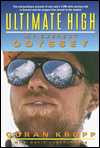
Ultimate High: My Everest Odyssey - Goran Kropp

The Basics: Ultimate High: My Everest Odyssey, Goran Kropp with David Lagercrantz, 1999, 227 pages, paperback

How I found it: This book was lying around my parents house. It's likely that it belongs to my dad.

What's it about?: Kropp was a mountaineer from Sweden who decided to climb Everest in a manner that he felt was the "purest" way to do it. This involved biking from Sweden to base camp with all of the gear and food he would need on the climb. He then attempted to climb the mountain using only his own gear, and food, using no fixed ropes or porters, and no bottled oxygen. Kropp climbed in 1996, the famous disaster year chronicled most famously in Krakauer's Into Thin Air, and several other books (I've read pretty much all of them). His climb ended up getting put on hold as the crisis unfolded.

Did I like it?: I've read a lot of mountaineering books and there are really two kinds of mountaineers: the normal ones and the crazy ones. Kropp was a crazy one. His dedication to his training was fanatical. He seems to have been quick tempered. But his journey is an interesting read as he has his own insight into the 1996 Everest season and other general mountaineering topics. In general, this was a fairly average read for a mountaineering book and not particularly great. However, it is by no means bad.

Will you like it?: There are much better mountaineering books, and even much better Everest books than this one. However, the "pure" way in which Kropp chose to climb is vaguely intriguing. Kropp also had aspirations to be a full time adventurer on the scale of Colin Angus. After his trip to Everest and back, he skiied to the north pole and had plans to sail to Antarctica from Sweden, ski to the pole, then sail back. However, Kropp died in a rock climbing accident in 2002 so this book is the only documentation of an adventuring career that never got off the ground.

But don't take my word for it: The usual reader reviews from and publishers blurbs Amazon, a review from the Denver Post, and one from the New York Times are all I could find.

Saturday, July 14, 2007

Video Night in Kathmandu and Other Reports from the Not-So-Far East - Pico Iyer

The Basics: Video Night in Kathmandu and Other Reports from the Not-So-Far East, Pico Iyer, 1988, 382 pages, soft cover.

How I found it: Random browsing in the travel writing section of Chapters. Plus, I had already read some of Iyer's work and knew I liked it.

What's it about?: Iyer took a series of trips to Asia in the mid-80s while most countries there were in the middle of becoming more and more Westernized. He writes a chapter on each of the countries he visited, Bali, Tibet, Nepal, China, The Philippines, Burma, Hong Kong, India, Thailand and Japan. For each chapter he focuses on the ways each country and its people are taking on Western influences, and the ways in which they are making them their own.

Did I like it?: Iyer is an excellent travel writer. He includes enough of himself in his writing to make the reader understand who he is and how he feels about the experiences he is having, but he doesn't include so much that his experience overshadows what the place is really about. Iyer also attempts to really engage the locals, understand their view and their life, and tell the reader a bit of their story as well as his own. Iyer's book is also a bit of a time capsule - it was written in the late 80s, almost 20 years ago, and presumably, a lot has changed. The edition I have contains a new afterword which was written in 2000. In the afterward Iyer comments that much has changed in Asia, in terms of the effects of globalization and technology, but that much as remained the same. I think that must be even more true now.

Will you like it?: If you are interested in travel writing, Iyer's is among some of the best and this is a great book to check out. Iyer manages to really personalize Asia, while at the same time illustrating how global culture is becoming. Great writing and some great stories.

But don't take my word for it: The usual collection of publishers blurbs and reader reviews from Amazon, a review from the blog of professional traveler and author Rolf Potts, vagablogging, a recent interview with Iyer, and a not as recent interview.

Saturday, June 16, 2007

Sweetness in the Belly - Camilla Gibb

The Basics: Sweetness in the Belly, Camilla Gibb, 2005, 415 pages, paperback, shortlisted for the Giller, winner of Ontario's Prix Trillim Book Award.

How I found it: Random browsing at Chapters.

What's it about?: The life story of Lilly, a white woman who grew up as a Muslim in Morocco and Ethiopia. The story is told in bits and pieces, jumping from her present as an immigrant to the U.K., back to her early days in Harar.

Did I like it?: I loved this book. Lilly is such a strong character, even when she feels she is weak. Her story was very compelling and unlike any I had read before. Camilla Gibb actually did at Ph.D. in social anthropology at Oxford with field work in Ethiopia, so her book is meticulous well-research and to me seems exceptionally authentic. Gibb writes very well and explains the cultural aspects of the book very well without detracting from the narrative. The love stories were also especially poignant.

Will you like it?: This is a great book as it is well written, has a great strong female protagonist and a great plot. There is nothing to dislike about this book. As with many that I read, it is more of a woman's book, but it is far from chick-lit. A good choice for book clubs.

But don't take my word for it: The usual stuff and reader reviews from amazon.ca, a review from Hour.ca, one from curledup.com, another from The Guardian, and a collection of reviews from Camilla Gibbs' website.

Monday, June 11, 2007

The 100 Mile Diet - Alisa Smith and J.B. MacKinnon

The Basics: The 100-Mile Diet, Alisa Smith and J.B. (James) MacKinnon, 2007, 266 pages, hardcover, published under the title Plenty in the USA (apparently so it doesn't get stuck in the diet book section along with all the Atkins and Weight Watchers books).

How I found it: This book has been heavily hyped in the alternative media that I frequent, including The Tyee, Canadian Geographic, Grist.org, Treehugger, and Kootenay Co-op Radio's Deconstructing Dinner.

What's it about?: Alisa and James are two Vancouver-ites who decide to eat only food from 100-Miles of their home for a year. Although Vancouver is in the fertile Fraser River valley and there are lots of farms around, their experiment proved much harder than they thought it would. The book is about their struggle to find local food, the adventures they had tracking down necessities like sugar (from honey) and flour (from an experimental Vancouver Island wheat farmer). They also meet lots of great farm people and rediscover their relationship with each other.

Did I like it?: I loved this book. I think it took me less than 24 hours to read. James and Alisa are very endearing people, and in a lot of ways they reminded me of myself and my life. The bravery they showed in taking on this experiment is commendable. I was also really impressed with how well they were able to write about their experience without sounding holier-than-thou or having to justify themselves. Those were main complaints about Judith Levine's Year Without Shopping, and by the end of her book I couldn't stand her. By the end of reading The 100-Mile Diet, I felt as if they were long lost friends and that I should call them up to go to the Halifax farmer's market with me, then come over for an awesome dinner.

Will you like it?: This is a good book for people interested in food politics, environmentalism, etc. But, it is not a sky-is-falling type book. It is about real people, real farms, and real food. It is about getting to know the region around you and what you can get from the earth. It is a book that makes you want to plant a garden in containers in your balcony and bike to Richmond or Delta for farm-fresh produce on the weekends. It is inspiring.

But don't take my word for it: The usual collection of literary and reader reviews from Amazon, some from the blogs Lectio and Green LA Girl, another from Treehugger, one from The Tyee, and the official 100 Mile Diet website.